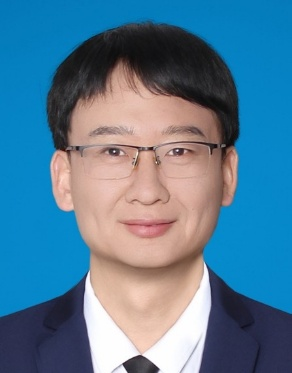
| Prof. Hongtao LuShanghai Jiao Tong University Hongtao Lu is now a tenured professor and doctoral supervisor in the School of Computer Science at Shanghai Jiao Tong University. His research focuses on artificial intelligence, including machine learning, deep learning, and computer vision, etc. He has published over 100 papers in internationally renowned academic journals and top-tier international academic conferences, with more than 11,000 citations on Google Scholar and an H-index of 55. He was consecutively selected into Elsevier's list of "Highly Cited Chinese Researchers in Computer Science" from 2014 to 2018, and was included in Stanford University's list of the "World's Top 2% Top Scientists". He was selected into the "Program for New Century Excellent Talents in University" of the Ministry of Education in 2005, and was awarded the title of "Shanghai Dawn Scholar" in 2003. He won the Second Prize of Shanghai Natural Science Award in 2010 and the Second Prize of Henan Science and Technology Progress Award in 2015.
Abstract: Embodied intelligence is a hot research topic in recent years. In this talk, I will introduce some of our recent methods in embodied intelligence research, including an embodied manipulation method based on experience feedback learning, an energy matching method for diffusion policies, a 6D affordance graph based embodied manipulation approach, and a multi-layer value map-driven robot navigation method. |
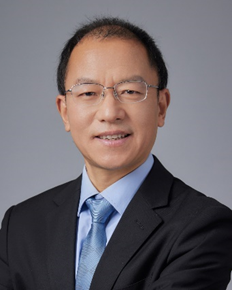
| Prof. Di HuangBeihang University Di Huang is a Full Professor, with the School of Computer Science and Engineering, Beihang University. His research interests include computer vision, representation learning, robotics, etc. He has published more than 120 papers in the major academic journals and conferences such as IEEE-TPAMI, IJCV, CVPR, ICCV, ECCV, with 17,000+ citations and H-index 60. He has been among the top 2% world-wide AI scientist list since released in 2019 (by Stanford University and Elsevier). He was awarded the Best Paper at CCBR 2016 and AMFG 2017, the Best Student Paper at CCBR 2017, the Best Poster Paper at ICB 2016, and the Honorable Mention for Best Student Paper at FG 2024. He was the winner of the Affect Recognition Challenge of AVEC at MM 2013 and the OCRTOC track in Robotic Grasping and Manipulation Competitions at ICRA 2022. He served as an Associate Editor for IEEE-TIFS and IEEE-TAFFC, a Guest Editor for ACM-TOMM, a Program Chair for FG 2027, an Area Chair/Senior PC Member for CVPR 2022/2024-2026, ECCV 2022/2026, MM 2019-2023, IJCAI 2021/2025, WACV 2024-2027, ICPR 2020/2024, IJCB 2021/2023-2025, ICMI 2021, ACII 2019-2023, and a Publicity Chair for FG 2019, IJCB 2020, and FG 2023. Speech Title: Open Vocabulary Semantic Segmentation Abstract: In recent years, semantic segmentation has advanced rapidly and played a vital role in areas such as autonomous driving, intelligent surveillance, and healthcare. However, new challenges have emerged, including dynamic variations of semantic categories in real-world environments and the prohibitive cost of annotating training data. This talk focuses on recent progress in open-vocabulary semantic segmentation, with an emphasis on solutions to key issues, such as dense representation learning and fine-grained feature mining under different paradigms, including strong supervision, weak supervision, and training‑free settings. Furthermore, this talk will discuss future directions of open-vocabulary semantic segmentation in the context of specific real-world applications. |
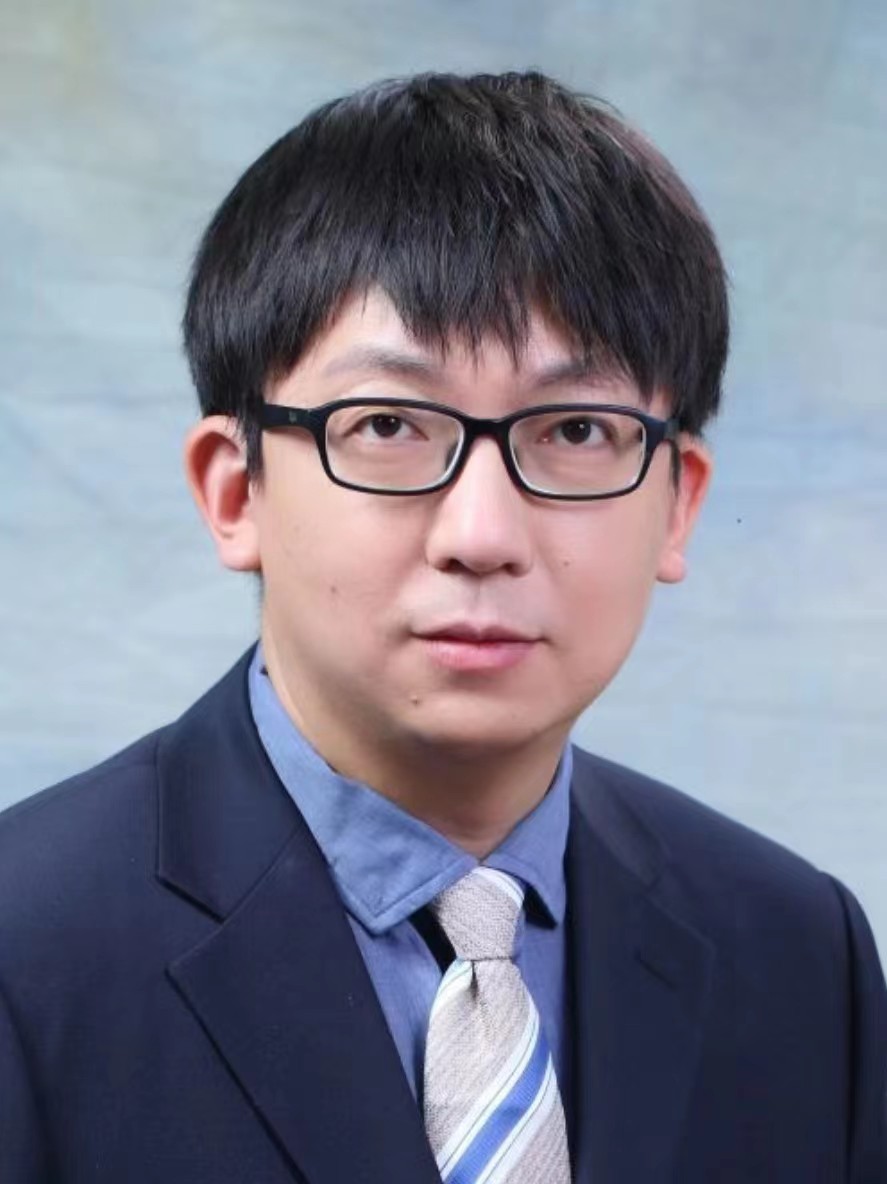
| Prof. Haiquan ZhaoSouthwest Jiaotong University Zhao Haiquan, PhD in Engineering, Professor, Senior Member of IEEE and the Chinese Institute of Electronics, Elsevier Highly Cited Scholar, Global Top 0.05% Scholar (ScholarGPS), Global Top 2% Scientist (Stanford), Academic and Technical Leader of Sichuan Province, Outstanding Expert with Outstanding Contributions in Sichuan Province, Winner of the Sichuan Province Outstanding Youth Fund, Distinguished Expert of the Haizhi Program of the Sichuan Association for Science and Technology, has published 280 SCI papers, received the First Prize of Natural Science from the Chinese Society of Automation, and six provincial and ministerial awards including the Second Prize for Science and Technology Progress from the Ministry of Education, the China Railway Science and Technology Progress Award, and the Tang Lixin Outstanding Scholar Award. He serves on the editorial boards of several international SCI journals including IEEE TASLP, IEEE TSMCA, IEEE SPL, and Signal Processing, among others. His main research areas are signal processing, pattern recognition, and artificial intelligence. Speech Title:State of charge estimation based on hybrid-driven Abstract:In recent years, new energy technology in our country has developed rapidly. Due to its significant advantages such as high energy efficiency and long cycle life, lithium- batteries have been widely applied in numerous fields. The state of charge (SOC) of a battery is a parameter that directly reflects its remaining capacity, and its accurate estimation and robustness crucial for battery energy management strategies and system safety. This report mainly shares our team's research progress in SOC estimation for hybrid drives |

| Prof. Wenhua QianYunnan University Wenhua Qian, Doctor, Professor, Doctoral Supervisor, Postdoctoral Fellow at Southeast University, Vice Dean of the College of Undergraduate Studies. Industry Innovation Talent of the "Support Program for Developing Talents in Yunnan Province", Young Talented Person of the "Yunling Series of the Ten Thousand Talents Plan" in Yunnan Province, Leader of the "Visual and Cultural Computing Innovation Team" in Yunnan Province, Young Academician of Yunnan Province. Core member of the "Graphics and Image Processing" discipline in the information science field, core member of the "Graphics and Image" course group. Member of the Chinese Society for Computer Graphics and Image Processing, Senior Member of the Chinese Computer Society, Senior Member of the Graphics Society, Member of the National Digital Entertainment and Simulation Society, Member of the Chinese Computer Vision Professional Committee, Member of the Digital Cultural Heritage Professional Committee, Editor-in-Chief of "Chinese Journal of Computer Graphics", Member of the Education Committee of Yunnan Computer Society. He has authored or co-authored over 80 papers in refereed international journals. He has published 3 monographs. Speech Title: Adaptive Infrared and Visible Light Image Fusion Method Abstract: A single sensor is unable to meet the increasingly complex task requirements. A multi-sensor system can simultaneously acquire data of multiple features, effectively overcoming the functional limitations of a single sensor by fusing multimodal data to generate high-quality images that can reflect the physical characteristics of the target object while maintaining the spatial structure. The fusion results can better serve subsequent advanced visual tasks. This report introduces the cutting-edge technologies for infrared and visible light image fusion, improving the fusion effect through complementary modal perception. |